Showing posts with label slow. Show all posts

Sunday, 29 May 2016

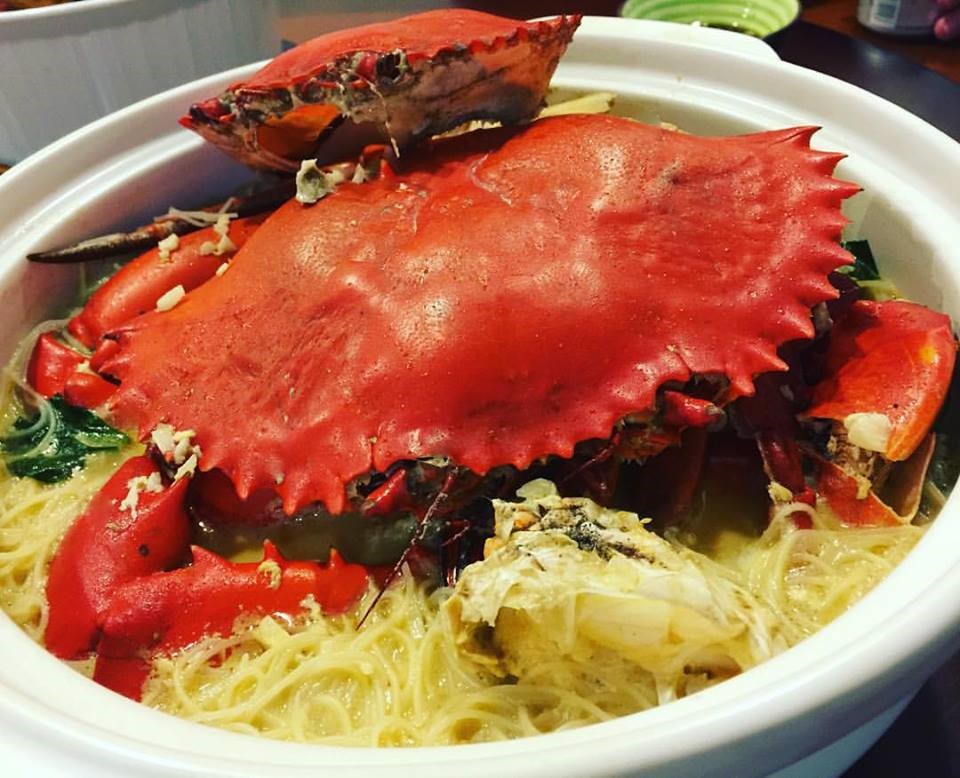
Crab bee hoon


Serves 4-6

Chicken stock
2 Chicken Carcasses
5-6 chicken feet
2 tablespoons dried soya beans
1 handful dried anchovies (Ikan Bilis), washed
1 white Onion, cut into wedges
5 - 6 garlic cloves, smashed
3 slices old ginger
Half a carrot, cut into chunks
About 1.5 litres water or enough to just cover all ingredients
(Optional: 2 teaspoons chicken powder)

2 large, fresh Sri Lankan crabs or 3-4 small to medium sized (or a combination!)
300g dried bee hoon vermicelli
2 tablespoons peanut oil
6 garlic cloves, finely chopped
3 slices old ginger
2 tablespoons of tsao tsing cooking wine
Chicken stock (above)
1 - 2 tablespoons dried Sole fish powder (made from 3 - 4 pieces of dried Sole)
2 tablespoons salted butter, melted
1/4 to 1/2 cup Carnation full fat evaporated milk
1/2 - 1 tablespoon fish sauce or soy sauce
1 handful of chye sim, cut into 3 inch pieces
Finely ground white pepper

1. Make the chicken stock by adding all the stock ingredients to a large pot. Skim as much scum as possible. Bring to a boil and then cover and lower to a simmer for 2 hours. Strain and discard the ingredients.

2. Cut the pieces of dried Sole fish and fry in some oil till golden brown - do not fry till it's too dark brown! Remove and set on some paper towels to drain the oil. Pound in a mortar and pestle or in a spice grinder till a powder. There will be excess so you can keep this in an air tight container.

3. Soak the dried bee hoon in tap water for 10 minutes and strain.

4. You should dispatch the crab just before cooking, or no more than an hour kept in the fridge on ice.
Cut the crabs into pieces.

5. In a large wok, heat the oil and add the crab pieces. Toss a few times and add the ginger and garlic. Keep tossing for about 5 minutes. Less than 5 minutes if you're using small crabs.

6. Add in the stock, Sole fish powder, melted butter and evaporated milk. Start off with 1/4 cup first. You can add more later if you prefer it milky.

7. Bring to a boil and add the fish or soy sauce, and white pepper to taste.

8. Add the strained noodles and chye sim to a large claypot and transfer the crab and stock to it. Cover and cook on for another 5 minutes.

9. Give the stock a final taste. If you like it more milky, add more evaporated milk.

10. Turn off the fire and serve in the claypot. Garnish with coriander leaves if desired and serve with dipping sauce of sliced chilies in soy sauce.

Adapted from The Bonding Tool.


Thursday, 5 May 2016

Braised beef and pork organs


Variety of beef and pork organs. I used:

Honeycomb beef tripe
Beef tendon
Beef liver
Pig intestines

Tamarind juice (to wash the honeycomb tripe if necessary)
4 slices of ginger
5 garlic cloves
Half an onion, cut into wedges
3 pieces red fermented beancurd, smashed
2 heap tablespoons chu hou sauce
Splash of tsao tsing wine
1 tablespoon oyster sauce
1 teaspoon thick dark soy sauce
1/2 teaspoon sesame oil
1 star anise
5 cloves
1/2 stick cinnamon
1 tablespoon sugar
1 teaspoon chicken powder
1 teaspoon white peppercorns
1/2 carrot, cut into pieces
1.5 litres of water

1. Wash the honeycomb tripe in some tamarind juice if it is very smelly.

2. In a pot, fry the ginger, garlic, onion, chu hou and beancurd in a bit of oil till fragrant.

3. Add a splash of tsao tsing wine and then add the water.

4. Add the rest of the ingredients, including the organ meat.

5. If using liver, add it at the last minute. Boil in water first, then add to the rest of the pot.

6. If using tripe, tendon and intestines, bring to a boil and simmer over low heat for 2 - 3 hours. 

7. Serve on top of noodles or rice with some hot mustard and chili sauce.


Thursday, 11 February 2016

Yam cake (Wu tao gou)


Main Ingredients:

About 320g Thai yam/taro
1 medium red shallots, sliced
2 chinese sausages
4 small dried chinese mushrooms, soaked in hot water, and marinade with a dash of soy sauce and a punch of sugar
2 dried scallops, soaked in hot water
20g dried shrimp, washed
1 clove garlic, finely chopped

* Do not discard the soaking liquid!

Seasoning:
150 ml  of water that the scallops and mushrooms was soaked in
1/2 teaspoon oyster sauce
1 teaspoon chicken powder
1/2 teaspoon sugar
1/2 teaspoon salt
1/2 teaspoon five-spice powder
Dash of finely ground white pepper

Batter:
85g rice flour, sifted
1.5 teaspoon wheat starch, sifted
150ml water

Other ingredients
150 ml water
1/2 teaspoon sesame oil

Garnish:
Spring onions
Toasted sesame seeds
Sliced red chillies

1. Soak the mushrooms and scallops in hot water for at least 20 minutes. Do not discard the soaking liquid.

2. Cut away the skin of the yam and into 2cm cubes. It should weigh about 320g without the skin.

3. Slice the shallots and fry in oil till golden brown. Remove and drain and keep the oil that is in the wok.

4. Immerse the Chinese sausages in boiling water, then take out the skin and cut into small cubes.

5. Squeeze the water out of the mushrooms and cut into small cubes, same size as the sausages. Marinate in a bit of soy sauce and sugar.

6. Squeeze the water out of the dried scallops and shred. Save both soaking water.

7. Rinse the dried prawns and give them a rough chop.

8. In the same wok which you fried the shallots, fry the cubed sausages till it's fragrant. Then add the mushrooms, scallops, prawns and garlic. Fry for about 3-5 minutes, or until the mixture smells really good. Remove from the wok.

9. In a bowl or measuring cup, measure out 150ml of the soaking liquid and add the oyster sauce, chicken powder, sugar, salt, five spice powder and pepper to it. Whisk and mix well.

10. Fry the yam cubes in the same wok until it changes colour. Remove 1/3 of the cubes and set aside.

11. Pour the seasoning mixture into the wok. When it comes to a boil, turn off the fire, cover, and let it sit for 15 minutes.

12. While waiting, sift the rice flour and wheat starch and pour in 150ml of water. Whisk well.

13. Prepare the tin. Line a 8.5 inch round steel shallow plate with baking paper and brush with sesame oil.

14. After 15 minutes, start the fire again and pour in the sausage/mushroom/scallops/prawns/garlic mixture. Add in the saved 1/3 cubes of yam and another 150ml of water. Bring to a boil.

15. Once it's boiling, turn the fire down to low and pour in the flour mixture. Remember to give it a whisk first as the flours might have settled to the bottom.

16. Stir the mixture until it becomes quite thick, so that when you lift it up with a spatula it won't fall down easily.

17. Pour the mixture into the lined tin and smooth the top with a spatula. Steam for 1 hour and then allow to cool.

18. Garnish with toasted sesame seeds, spring onions, sliced chilies and the fried onions.

19. Optional, you can slice and fry in a pan after steaming and cooling.

*Note: This feeds about 4-6. If you want you can double the recipe and put it in a 9 inch round cake tin.

This recipe was adapted from a recipe from the YouTube Channel wantanmien.


Friday, 28 August 2015

Lazy Kway Chup


Different people love different parts of kway chup - my family prefers the small intestines so I use that the most. I can't give an exact amount of how much you'll need of each, but use as much or little as you like!

Some of the ingredients commonly used:

Pork belly
Small intestines, washed
Big intestines
Tau pok
Fish cake
Hard boiled egg

(I marinated the pork belly and intestines in a bit of Mei Kwei Lu, which is a rose alcohol. You won't have to do that for the non pork ingredients)

Sauce for the ingredients:

3 tablespoons oyster sauce
3 teaspoons dark soy sauce (the thick syrupy one)
1-2 teaspoon  sesame oil
5 tablespoons normal soy sauce
5 teaspoons sugar
Few dashes Maggi seasoning
1/4 teaspoon Chinese Five spice powder
1 star anise
3-5 cloves
1 centimeter bit of cinnamon stick
4-5 garlic cloves, lightly smashed
3-4 slices ginger, lightly smashed
1/2 teaspoon black peppercorns
1/2 teaspoon white peppercorns
1 cup of water

For the soup:

2 pork bones
1 onion
4 cloves garlic
black peppercorns
Fresh flat white noodles

1) If using pork belly and intestines, wash the intestines first and marinade all in a bit of Mei kwei lu.

2) Combine all ingredients for the sauce and add to the slow cooker.

3) For pork belly and intestines, add it all together with the sauce in the slow cooker. Cook on high for 2 - 3 hours.

4) While that is cooking, make the soup stock. Throw in the pork bones, onion, garlic and peppercorns into a pot. Add enough water to cover.

5) Bring to a boil and remove scum. Turn down the fire, cover and continue boiling for as long as you can (2-3 hours) - just as the pork belly and intestines are ready.

6) When the pork belly and intestines are tender, add in the other ingredients such as tau pok, fish cake and hard boiled egg. Cook for another 15 - 20 minutes.

7) Strain the stock and add some salt. Then add about 1/2 cup of the sauce into the soup base. Keep it hot.

8) Remove all the ingredients from the slow cooker and start chopping into bite sized pieces. Serve onto a plate and spoon the sauce over.

9) Put some rice noodles into a bowl and spoon over the hot soup.

10) Garnish with coriander, spring onions and fried shallots.

11) Serve with chili sauce. As this is the lazy way, forget about doing it yourself. The chili sauce with garlic and ginger is just as good as home made!

Thursday, 20 November 2014

Home made paneer

Makes about 450g of paneer


3 litres of full fat milk
300ml of cooking cream
120ml white vinegar (plus a bit more, depending on the acidity of your vinegar)
ice cubes
salt and water (for storage)

Equipment:
kitchen thermometer
Cheese or muslin cloth
A colander with a flat base
Some weights

1. Combine the milk and cream in a big pot and boil, stirring occasionally till the temperature reaches 85 - 87 degrees celsius.

2. Get ready the ice cubes next to you.

3. Line another pot with a wet cheesecloth.

4. Once the milk and cream reach the right temperature, slowly pour in the vinegar, stirring slowly. If you can't see the yellow/green liquid (the whey), you probably need a bit more vinegar.

5. Quickly add in the ice cubes to bring the temperature down.

6. Pour the curdled milk into the pot lined with the cheesecloth.

7. It's hot, but try to squeeze as much liquid out as you can, and twist the cloth into a ball.

8. Keep the cloth twisted and place in the colander with a bowl underneath to catch any remaining water. Place about 2kg weight on top of the cheese. You can use a pot or a plate to make the top flat so as to distribute the weight evenly. (I used pebbles from my garden in a pot)

9. After 2 hours, your paneer is ready! Slice and or cube as you like.

10. You must store it in water, completely submerged. This will last you about a week. I added salt in my water so the paneer tastes slightly salty. I believe you can add the salt at the beginning when the milk is boiling too.

This recipe is from Chef Harpal Singh. Check out the video here!

Monday, 21 April 2014

Easy as ABC Soup


Serves 8

4 chicken breasts with bone on
Chicken bones/chicken feet (Optional)
2 red tomatoes, cut into wedges
4 onions, cut into wedges
5 whole cloves garlic, peeled
2 waxy potatoes, cut into chunks
2 carrots, cut into chunks
1 ear of corn, cut into 4 - 5 pieces
1 - 2 inches Yunan ham, sliced into thick chunks (optional)
Enough water to cover ingredients
Salt, to taste


1. Boil some water and place the chicken feet, breast and carcass for one minute. Strain and rinse with tap water.

2. Chop tomatoes, onions, potatoes, carrots and sweet corn.

3. Place all ingredients in the pot and bring to a boil. Skim the scum off the top.

4. Once it boils, reduce to the lowest heat, cover and simmer for 2.5 to 3 hours.

5. Remove all the bones and serve hot.

* You can choose to serve with chicken feet – looks icky but packed with collagen (good for your complexion!). If you don’t like to eat, throw it away. I usually fish them out, pour some soy sauce, sesame oil and finely ground white pepper over it, and eat them! (They're always fought for in our family!)


Why is it called ABC Soup? The reasons are unclear but some say it's because you're getting all the Vitamins A, B and C from this soup. Or, that this soup is as easy as ABC to make! It is really so easy there's no reason not to try it!


It's also really a one pot meal. Just steam some white rice, spoon the rice into a bowl and the soup on top, garnish with some spring onions and soy sauce - it's a meal!


Monday, 16 December 2013

Whole roasted pig on a spit


We decided that in order to top off last year's Turducken (a chicken stuffed inside a duck stuffed inside a turkey), we had to do something really spectacular.

So, roasting a whole pig was what we decided. This pig turned out to be 26 kilos - we originally ordered a 17 kg pig but they didn't reserve that for us. It took 6 hours to cook, and fed about 25 people - but with plenty of leftovers.

There are no pig farms in Singapore and our pork is imported from Asia and Europe, this one is from Holland. The meat was so delicious and moist. We unfortunately screwed up the crackling as we score the skin enough. But, we had left overs and they could still be saved by removing the skin from the meat and roasting just the skins in a 160 degree Celsius oven for about 20 - 3 minutes.

Our house mate has done this many times before in his home country. However, they make a rotating spit with old windshield car motors. We can't get that here so the whole spit was made from scratch from pieces of wood, wire and metal. It was turned by about 6 people, each taking turns for 20 minutes.


As a side dish, I made a turkey (when you have a 26kg pig, the turkey becomes a side!), Peruvian inspired style, thanks to my favourite YouTube chef, Chef John from Foodwishes.com. I also made his Green Bean casserole, which was actually not much different to my husband's family recipe. And, for dessert also Chef John's pumpkin cheesecake pie.


Sunday, 17 November 2013

Chinese whole roasted duck with homemade pancakes


Serves 2 very greedy people or 4 if you have other dishes

For the duck:
1 litre of water
3 tablespoons honey
1 orange, sliced (or if you have dried orange peel, put about 2 of those in to substitute)
3 tablespoon dark soy
150 ml tsao tsing wine
1/2 teaspoon Chinese five spice + extra
1/2 teaspoon ground white pepper
2 star anise
1/4 teaspoon ground cinnamon
4 slices of ginger
3 cloves of garlic
Salt

For the pancakes:
285g plain flour
250 - 270ml very hot water
Sesame oil

To serve:
Sliced cucumbers
Sliced spring onions
Hoisin sauce

Equipment:
Meat hook ( I actually don't have one so I MacGyver-ed it with a metal clothes hanger)

1. Wash the duck thoroughly, plus inside the cavity. Pat dry.

2. In a large pot with 1 litre of water, add the honey, orange, soy, wine,  1/2 teaspoon of five spice, pepper, 1 star anise, cinnamon, 2 slices of ginger and 1 clove of garlic. Bring to a boil and then lower the heat to simmer for 10-20 mins.

3. Cut off the feet and wings off the duck (I didn't because I like those bits) Hook the duck on the head end and hold it on top of the pot. Turn up the heat - it has to be really hot. Using a ladle, baste the whole duck in hot stock, letting the stock run back down into pot the till the skin is slightly dark yellow. Reserve the liquid (optional if you can't find hoisin sauce).

4. Hang it to dry for 5 hours or over night, in front of a fan. After 5 hours the skin should feel very tight, shiny and dry.

My husband, just hanging out with our duck

5. Season the duck inside with salt, pepper, a pinch of five spice, a pinch of cinnamon, one star anise, 2 slices of ginger, and 2 cloves of garlic. Don't season the skin. Preheat the oven to 240 degrees Celsius.

6.  Remove the hook and place the duck on a rack with a tray under it filled with 150ml of water. Roast the duck at 240 degrees Celsius for 15 minutes, then lower to 180 degrees Celsius for 1 hour 10 minutes. Halfway through I wrapped the feet and tips of the wings in foil so they won't get burnt. If you've cut them before roasting then you don't need to do this step.

7. While the duck is in the oven, make the pancakes. (Or you can make this while the duck is hanging out to dry) In a bowl, stir in the hot water into the flour until it's absorbed. Knead for about 5-10 minutes until it's smooth. Cover and rest for half hour. It should look like this:


8. After 30 minutes, take it out of the bowl and knead it again for a minute. If it's sticky, dust a bit of flour. Roll into a cylinder 18 inch long by 1 inch. Cut into 1 inch segments. It should make about 18.

9. Roll two segments at a time into two balls. Take one of the balls and dip the bottom part into sesame oil and then put that on top of the other ball. Roll them out into 6 inch circles. Be careful not to seal the outside too much. Use some flour to dust if it gets too sticky.

10. Cook in a dry pan on low heat until it's dry and slightly browned. Let it cool and then carefully separate the two pancakes.

11. I couldn't find hoisin sauce at my convenient store so I had to make my own sauce. I used the basting liquid and reduced it till it was syrupy, then thickened it with some cornflour mixed with water. If you can find hoisin sauce, then skip this step.

12. Remove the duck from the oven and allow it to rest, uncovered for about 20-30 minutes. Slice the duck and serve with pancakes, cucumbers, spring onions and sauce.


* The ducks in Singapore markets are not very meaty. My mother says it's because the sellers save the biggest ones for the hawkers and the restaurants. I don't know what it's like in other countries though! 

If you are able to get real chummy with your poultry seller and get him to save you a big one, that would be cool. But a normal duck from the supermarket or wet market will feed two greedy people (my husband and I ate it all... at one go) and about four normal folks.

I adapted this recipe from Ken Hom with a 1980s haircut. You can check it out on YouTube here. It's his recipe for Peking Duck. I don't want to call this Peking Duck because you really need some skill and proper equipment to make that. The traditional Peking duck  skin has to be really crispy, but in our normal ovens it may not be possible. But this recipe is still good and quite crispy anyway! 

Tuesday, 22 October 2013

Singapore mutton soup (Soup kambing)


Serves 4

Marinade:
About 700g mutton with bone (either shanks or ribs), chopped into 2 inches pieces
1 inch knob old ginger, roughly chopped
1 inch knob blue ginger/galangal, roughly chopped
4-5 cloves garlic, roughly chopped
6 small red shallots, roughly chopped
3 coriander roots
3 big green chillies, chopped into 1 inch pieces
1/4 teaspoon methi/fenugreek seeds
1/4 teaspoon black mustard seeds
1/4 teaspoons fennel seeds
1/2 teaspoons ground turmeric
1/2 teaspoon curry powder
1/2 teaspoon ground cumin
1/2 teaspoon finely ground white pepper
About 3 tablespoons groundnut oil for frying and making it into a paste

Soup:
41/2 cups beef/veal or chicken stock (I used store bought beef stock but if you have a home made one, even better)
2 cardamon pods, bruised
1/2 stick cinnamon
1 star anise
1/2 cup coconut milk
1 teaspoon sugar
salt and pepper to taste *
*Optional. The stock may already contain enough salt, and there's already pepper in the marinade

Garnish:
Fresh coriander leaves
Fried shallots
French baguette


1. In a mortar & pestle, food processor or hand blender, blitz the old ginger, blue ginger, garlic, shallots, coriander roots and green chilies together to form a paste (add some oil to make it come together)

2. In a wok, heat about 2 tablespoons of groundnut oil to medium. Fry the fenugreek, mustard and fennel seeds - be careful as they will pop as soon as you do. Quickly throw in the ground paste. Do not burn the fenugreek, mustard or fennel seeds.

3. Fry the spiced paste till it's fragrant, about 3 to 5 minutes. Then add the turmeric, curry powder, cumin and white pepper and fry for another minute or so, till it's fragrant. Remove from wok and set aside to cool.

4. Once it's cooled, mix it in with the mutton pieces. Marinade for at least 2 hours.

5. In a pot, bring the stock to a boil with the bruised cardamon pods, cinnamon stick and star anise. When it boils, add in the marinated meat with the spice paste. If there's any spice mix left in the bowl, add a bit of water and throw it all in the pot. Do not waste the paste.

6. Bring to boil for about 3-5 minutes and the lower the heat to the lowest possible and cover for about 2 -3 hours, or until the meat is tender.

7. Remove the meat from the bones and add it back to the soup. Pour in the coconut milk, and add the sugar. Taste to see if you need to add salt and white pepper. Simmer for another 30 minutes before serving.

8. Garnish with fried shallots and coriander leaves. Eat with French bread.

Mutton is referred to as goat meat or the meat from an adult sheep. In this case, it's goat. I got mine from Tekka Market in Singapore and it's widely available there. Goat meat contains less cholesterol and is less fatty than beef or lamb. It has less calories too. 

If you can't find goat meat, you could probably use adult sheep - or if you can't find that either, you could use lamb. (Although I'm told in some European supermarkets they sometimes try to pass of adult sheep as lamb.)

Some stalls make their Soup Kambing thick, some thin, some not so oily, some with a film of oil on the top (my favourite type!). Although it uses traditional Indian ingredients, Soup Kambing is actually a Singaporean dish, according to Carry It Like Harry . There's no other dish similar in India. Sold mostly by Singaporean Muslim Indians, this rich and flavourful soup is very popular in Singapore and Malaysia, and probably in my top three favourite local dishes.

Sunday, 8 September 2013

Gary Mehigan's really sexy Beef onion and Guinness pies


Makes 6 pies

Filling:
100ml normal olive oil, plus extra for greasing
5 onions, sliced
4 cloves garlic, smashed and peeled
4 sprigs thyme
3 fresh bay leaves (or about 1-2 dried bay leaves)
2 tablespoons plain flour
1.5kg trimmed chuck steak, cut into 5cm pieces
Salt flakes and freshly ground white pepper
1 carrot, cut into large chunks
440ml can Guinness
2L home-made beef stock (I used store bought!)
1 egg, beaten

Maggie Beer’s Sour-Cream Pastry:
200g chilled unsalted butter, chopped
250g plain flour, plus extra for dusting
½ cup sour cream

Equipment:
1 jumbo 6-cup muffin tray


1. Preheat your oven to 180°C fan-forced or 200°C conventional.

2. To make the filling, add 40ml olive oil to an enamelled cast-iron casserole, then add the onion, garlic and thyme and cook over low heat (use a simmer mat, if necessary) for 40 minutes or until the onion is soft and translucent. Stir occasionally. Increase the heat to medium-high, add bay leaves and cook until the onion is  caramelised. Add the flour and cook stirring often for 3-4 minutes.

3. Season the beef generously with salt flakes and ground white pepper. Heat remaining 60ml of the olive oil in a large frying pan over high heat, then cook the beef in 2 batches until browned on all sides. Add the carrot and cook for 5-6 minutes. Add ¾ of the Guinness and cook for 5 minutes. Tip beef and Guinness into onions. Use remaining Guinness to deglaze the beef pan, scraping all the brown bits from the bottom, add to the onions.

4. Pour enough beef stock to cover the beef and vegetables and bring to the boil. Cover with a tight fitting lid, then transfer to the oven and cook for 2-2.5 hours or until tender. Leave to cool to room temperature. Remove the chunks of beef and carrot to a board and chop into 1cm pieces, then return them to the onion gravy. Refrigerate until cold.

5. While it's refrigerating, make the sour cream pastry. Place the butter and flour and a pinch of salt in the bowl of an electric mixer with a paddle or food processor, then blend until the mixture resembles large breadcrumbs. Gradually add the sour cream, mixing until the pastry just comes together. Shape into a disc, then wrap in plastic wrap then chill for at least 20 minutes.

6. Grease 6 holes of a muffin pan with a little olive oil. Roll out the pastry to 3-5mm thick, using a little extra flour for dusting. Cut out six rounds about 4cm bigger than the muffin holes for the pie bases and six rounds 2cm bigger than the muffin holes for the pie lids. Place a pie base in each hole, then press in in lightly with your fingers, and draw the pastry up the mould a little so the pastry is 1cm above the mould. Fill each hole with some of the beef mixture, brush edges with water, then top each with a pastry lid and crimp the edges to seal in the filling.

7. Brush the pastry tops with beaten egg, cut a small hole in the centre of each pie for steam to escape. Bake for 25 minutes or until pastry is golden. Remove from the oven and leave to stand for 5 minutes. Turn out and serve with tomato sauce, if desired.

* This recipe was taken from the Masterchef Australia website. What an awesome show! 

Maggie Beer's Sour Cream pastry is pretty good. However, I think the amount is slightly too little. I'd make a little extra just in case. Especially if you pie is really dense and heavy, you'll need more pastry to hold it up. 

Tuesday, 27 August 2013

How I make my chicken stock

One large pot of water
2 chicken carcasses
10 chickens' feet
2 chicken leg quarters
2 onions, cut into large wedges
5-6 cloves garlic, bruised and skin removed
2 carrots, cut into chunks

1. Bring a large pot of water to a boil.

2. Immerse all ingredients. Water should just cover all the ingredients.

3. Bring to a boil again and skim off all the scum.

4. Lower the heat to as low as you can (you should still see a bit of bubbling) and lightly simmer, covered, for 2 hours.

5. Strain and take out the carcasses and legs. When it's cooled, pick out all the meat and use it for chicken mayonnaise sandwiches. Discard the rest.

6. Season with salt and pepper if you wish.

7. To make a clearer stock, freeze the stock in freezer bags. Once it's frozen, remove the iced stock and place it on top of a strainer lined with a cheesecloth. You can use kitchen paper but you may need to change it a few times.

8. Let it drip into a bowl - this may take a few hours.

* Can be used in hotpots, soups, sauces... or whenever you feel you want to substitute water.

Pigs organ soup


Serves 2

2 handfuls of small intestines, washed and cut into 3 inch pieces
As much pig's liver as you like, sliced
1/2 tablespoon black peppercorns, lightly smashed
1/2 teaspoon white vinegar
finely ground white pepper
tsao tsing wine
1 tablespoon sugar
pinch of salt
Coriander leaves or spring onions to garnish
Optional: pickled vegetables or Chinese cabbage

1. Marinade the intestines with pinch of white pepper and tsao tsing wine.

2. In a small - medium pot, bring water to a boil with black peppercorns and vinegar.

3. Add the intestines to the boiling water and skim off as much scum as you can.

4. Lower the heat to a simmer and boil for 1.5 to 2 hours.

5. After boiling for 1.5-2 hours, season with salt and sugar and more ground white pepper.

6. Boil the liver till it's fully cooked and garnish with coriander leaves or spring onions.

* I know a lot of people get squeamish about the odd bits of an animal. I love them. In fact there's probably nothing I wouldn't eat, and I dislike nothing that can be put in my mouth. As kids, my siblings and I never had that stage of hating foods like broccoli, other vegetables. We ate what Mum and Dad ate, and that was that. 

In Singapore the odd bits are prized - pigs tails, pigs organs, chicken livers, hearts, bones, heads, - what a butcher would give you for free in Western countries, we have to pay for here. They are cheap but it's not free! I believe when some people say if you kill an animal, then respect it by using every part of it.

Organs were once so prized they were on the tables of kings and queens! I urge you to try it out - what's the worst that can happen to you!?

Friday, 23 August 2013

Singapore prawn noodles soup


Serves 4

20 fresh whole prawns (the shells and heads have to be saved)
1 big fish cake, cut into slices
4 cups bean sprouts
4 large handfuls fresh egg noodles

For the stock:
About 550g prawn heads and shells
(use the ones from the fresh 20 and ones you've collected in the freezer from previous meals)
Pig's tails or pork ribs (about 600g), chopped into chunks
1 handful ikan billis (dried anchovies), washed and strained
1 handful of dried prawns, washed and strained
1 large carrot, cut into chunks
2 red onion, cut into wedges
8-10 cloves garlic
5 slices ginger
1 pot of boiling water (water should be enough for 4 bowls, plus 2 extra bowls)
* Optional tsao tsing wine

To taste: 
4 teaspoons sugar
1 tablespoon soy sauce
Salt & pepper

To garnish:
Spring onions, chopped
Fried garlic ( you can make yourself or buy from a jar)
Chili powder


1. Peel the 20 prawns and reserve the heads and shells. (Works out to about 5 prawns each)

2. Bring a pot of water to a boil and add in the pig's tails. Boil for about 2 minutes and discard the water and rinse the tails in cold water, removing any dirt.

3. Fry the dried shrimps, ikan billis in some oil till fragrant, then add the garlic, ginger and onions. Stir fry for a while and then dump in the fresh prawn heads and shells, plus the others that you've reserved in the freezer.

4. Take your time to fry the shells, they will take a while before they all turn slightly brown and fragrant. Once it turns slightly brown and the shells have reduced in size, add a splash of tsao tsing wine (optional). Be sure not to burn them because that will leave a really horrible taste in the soup.
Note: Open all your windows and turn on the fans while doing this process!

5. Add the boiling water and pig's tails and carrots, and bring to a boil. While boiling, keep removing the scum. Once that subsides, turn the heat down to low on the smallest flame possible and simmer for 1 hour, covered.

6. After 1 hour, drain the stock to another pot through a sieve. Pick out the pigs tails and put them back into that drained stock. Try to squish as much stock out of the prawns as possible through the sieve. Discard the shells.

7. Add in the  sugar, soy, salt and pepper to your own taste and simmer on low for another 1 hour, covered.

8. Boil the bean sprouts in water and a bit of salt till it's still crunchy but tender. Drain and set aside.

9. To serve, bring a separate large pot of water to a boil with some salt. Boil the fresh noodles for about 2-3 minutes. Drain and immediately immerse in cold water. Drain again.

10. With a strainer or a kitchen spider, cook the prawns and fish cake in the stock for about 2 minutes. Remove and set on a plate.

11. With a strainer or spider, quickly blanch the noodles in the stock to give it flavour.  Drain and divide into 4 bowls.

12.  Arrange the prawns, fish cake and bean sprouts on top of the noodles and pour over the hot stock.

13. Garnish with spring onions and fried garlic. Chili powder is optional.You can serve this with a fresh sliced red chilies in soy sauce for dipping the prawns and fish cake into.

14. Also, reserve the pigs tails or pork ribs and serve those up if you like. Some people love to eat the tails (I do!) If you can't stomach them, discard them!

* This is my own recipe. I've made this about 10 times in my life and almost all of them have tasted different, but this time is by far the best. You really do need the pig's tail. In Singapore they can be found in most wet markets, but I'm sure in the west your local butcher will be able to give them to you - maybe even for free!!

Friday, 21 June 2013

Chocolate Ice Cream


Makes 1 quart

1 can (14-ounce/400 grams) sweetened condensed milk
3/4 cup (180 grams) whole milk (full fat milk, 3.5 - 4% butterfat)
3/4 cup (175 grams) heavy cream (whipping cream, 36 - 40% fat)
6 ounces (170 grams) bittersweet chocolate, chopped finely (bittersweet - extra dark, more than 35% chocolate liquor, 65 - 70% cocoa)
1/4 cup (25 grams) cocoa powder
1/2 teaspoon instant espresso powder (or two tablespoons freshly-brewed espresso)
1 teaspoon vanilla extract
A pinch of fine sea salt
5 teaspoons (12 grams) cornstarch ( best to follow 12g on weighing scale)
2 tablespoons cold water

To garnish:
Very fruity extra virgin olive oil
Smoked sea salt flakes

1) In a large pan, whisk sweetened condensed milk, whole milk and heavy cream until combined. Set the pan over medium-high heat and bring to a boil.

2) Take off heat and add the finely-chopped chocolate, cocoa powder, instant espresso powder, vanilla extract and salt. Whisk until the chocolate melts and the cocoa powder is completely dissolved.

3) Mix cornstarch and cold water in a bowl with a fork until completely dissolved, and add to the ice cream base. Whisk until combined.

4) Place the pan over medium-high heat and cook, whisking constantly, scraping the sides and the bottom of the pan to prevent burning, until thickened, for 8-10 minutes.

5) Transfer to a heatproof bowl and set aside, uncovered, to cool for half an hour. Don't worry if a skin forms on top. When the bowl is cool enough to handle, cover with plastic wrap and chill thoroughly--preferably overnight--in the refrigerator.

6) Before transferring the chilled ice cream to the freezer, stir or whisk to dissolve the skin on top and scrape into a container. Cover with plastic, this time pressing the wrap against the ice cream to create an airtight seal; put the lid on (or cover with an additional layer of plastic wrap) and freeze until firm enough to scoop.

* This is from A Cup of Jo. Although it makes an awesome ice-cream, it does freeze to pretty hard! You'll have to thaw it out a bit to serve. When you do serve it, it's really more of a fudge. So rich and really pretty good. However, my husband prefers the Chocolate Pudding instead. 

Sunday, 9 June 2013

Hainanese chicken rice


Serves 4 - 6

For the chicken
1 big chicken
1 inch knob of ginger
5 - 6 cloves of garlic, whole
2 stalks spring onions
1 pandan leaf, tied into a knot
splash of tsao tsing wine
salt & finely ground white pepper

For the dipping sauces

1) Chili sauce
big red chilies
small red chilies
grated garlic
grated ginger
sugar
lime juice
salt
oil and some of the chicken soup
(all blended) 

2) Ginger garlic sauce
Some ginger, peeled
Some garlic, peeled
Spring onions, chopped
salt
sugar
oil and some of the chicken soup
(Blend all ingredients. Fry the ginger, garlic and spring onions in oil first) 

3) Thick soy sauce

For the chicken soup
1 pot of water
4-5 slices of ginger
garlic
pandan leaf tied to a knot
spring onions
salt

For the chicken sauce
Sesame oil
Light soy sauce
Chicken soup

For the rice
Rice, washed and dried.
Fat from the chicken's backside and trims, cut into small pieces
Whole peeled garlic, lightly smashed
1 stalk spring onions, tied to a knot
1 stalk pandan leaf, tied to a knot

For garnish
Coriander leaves
Spring onions, julienned and soaked in ice cold water
Slices of cucumber

1) Wash the rice till the starch runs clear. Dry.

2) Clean and dry the chicken and stuff the garlic, ginger, spring onion and pandan leaf into the cavity. 
Rub the skin with salt and pepper. Then with tsao tsing wine.

3) Bring the pot of water to a boil with the garlic, ginger, spring onions and pandan leaf. Once the water boils, immerse the chicken fully into the water. Turn off the heat, cover and leave it for 30mins. Turn it back on again to bring to the boil, then turn off and cover for another 30 minutes.

4) Remove the chicken and rub it all over with sesame oil, and leave to rest. Reserve some stock for the chili, garlic, and chicken sauce. Use the rest to cook the rice.

5) For the chili sauce, blend all the ingredients in a food processor with a bit of the stock.

6) For the ginger garlic sauce, blend the ginger and garlic. Add some oil to a fry pan and fry till fragrant. Add the salt, sugar a bit of the chicken soup and spring onions.

7) Fry the pieces of chicken fat in a wok until the fat renders out. Add in the whole garlic cloves and fry till fragrant. Add the rice and fry till it turns slightly light brown or smells slightly toasted.

8) Add the rice to the rice cooker, and add the appropriate amount of chicken soup in the cooker. If there's not enough, add water. Then add the spring onions and pandan leaves. 

9) When the rice is done, remove the garlic, spring onion and pandan leaves and fluff the rice.

10) In a small bowl, combine light soy, stock/chicken soup and sesame oil. (You can serve this separately for dipping or pour it over the chicken after it's been chopped). 

11) Chop the chicken into bite sized pieces. 

12) Arrange sliced cucumber at the bottom of the serving plate and then the chicken pieces on top. Pour sauce over, if you want.

13) Garnish with the coriander leaves and spring onions soaked in cold water.

* If you want to cut down on cooking time (greatly!) just use store bought chili sauce and mix bottled minced ginger and bottled minced garlic together. It isn't the same but it will do! 

This is also my own recipe and I've probably made this about 5 times. (It's a lot of work!) It's always undergoing changes as I experiment a lot and I'm not very good at taking exact measurements.


Thursday, 23 May 2013

Crockpot Pulled Pork


Serves 4-6

1 large white onion, sliced thin
1 tablespoons brown sugar
1/2 tablespoon paprika
1 teaspoon kosher salt
1/4 teaspoon freshly ground black pepper
350 - 400g boneless pork butt or shoulder
¼ + ½ of the quarter cup cider vinegar
2 teaspoons Worcestershire sauce
1 teaspoons crushed red pepper flakes
¾  teaspoons sugar
¼  teaspoons dijon mustard
2-3 crushed garlic cloves
¼ teaspoon cayenne pepper
2 tablespoons soy + 4 tablespoons water

Extra
Sugar
Salt
Vinegar
Cayenne

1. Rinse pork roast under cold water and pat dry with paper towels.

2. Place onions in crock-pot. In a small bowl, combine brown sugar, paprika, kosher salt and pepper; mix thoroughly. Rub mixture all over roast and place the roast on top of the onions.

3. In a medium bowl, combine vinegar, Worcestershire, red pepper flakes, sugar, mustard, garlic salt and cayenne pepper; whisk to combine. Drizzle about 1/3 of vinegar mixture over roast and soy + water mix. Cover and refrigerate remaining vinegar mixture.

4. Cover crockpot; cook on low for 6-7 hours.

5. Remove meat and onions; drain. Chop or shred meat and onions and mix with extra sugar, salt, vinegar & cayenne.

6. Place the chopped meat back into the pot to keep warm and drizzle about the rest of reserved vinegar mixture over the meat.

7. Serve with coleslaw in a hamburger bun.

* This is adapted from My Baking Addiction. I wasn't over the moon about this recipe but it still tasted good. Will have to experiment more. 

Wednesday, 8 May 2013

Mini pork pies


Makes 6

Pork filling:
 350g pork shoulder (including fat), or combination of pork shoulder and fresh sausage meat to make 350g (you can use all sausage meat if you like)
 110g back bacon rashers, derinded
2 garlic cloves, crushed
 1 sprig fresh thyme with leaves removed
 salt and lots of freshly ground black pepper
Optional: 2-3 anchovy fillets, chopped, with 1/2-1 teaspoon of anchovy oil

Hot-water crust pastry:
 450g plain white flour, plus a little extra for dusting
 a pinch of salt
 50 ml milk
 50 ml water
 150g butter

Glaze:
 1 large egg yolk

Equipment:
1 jumbo 6-cup muffin tin

1. If using pork shoulder, coarsely chop in a food processor or hand chop with a knife into 1cm cubes or smaller but don't mince.

2. Combine all the other filling ingredients and pre-heat the oven to 180 degrees Celsius.

3. Measure flour and salt for the crust into a mixing bowl.

4. Cut butter into cubes. Add milk and water into a saucepan, and add the butter. Place the pan over gentle heat. When butter has melted, turn up the heat to bring it up to a boil. As soon as it does, pour it over the flour and mix with a wooden spoon till it forms a dough.

5. Turn the dough out on a work surface to bring it altogether. Take 2/3 of the dough and divide it into 6 parts. Roll each part into 6 balls and place 1 in each of the muffin tin.

6. Press each ball onto the base and up the sides of the cup to the top. The pastry may tear but don't worry, just fix it by pressing some more pastry on the tear. This pastry is very easy to work with, so if there's a mistake, don't panic! Treat it like play dough.

7. Spoon equal amount of pork filling into each of the cups.

8. Sprinkle more flour on the surface and roll out the remaining pastry and cut out 6 rounds for the lids.

9. Paint each of the edges of the lids with beaten egg yolk, and over turn it onto the muffin cups. Use a fork and press to seal the egg-yolked edges onto the top of the pies.

10. You can use any left over pastry to make decorations. Glaze the tops using the rest of the egg and make a 1 centimetre steam hole in each pie.

11. Place the muffin tin on a baking sheet and bake for 30 minutes on middle shelf. After 30 minutes, remove the baking sheet from oven.

12. Remove the pies from the muffin tin carefully using a knife and oven gloves, and place directly onto the hot baking sheet.

13. Place it back onto the oven and bake for another 20-25 minutes or until the pies are golden brown.

14. Leave to cool on a wire rack. Serve hot or leave in fridge for a cold lunch.


* This is adapted from Delia Smith's recipe. I've simplified it a little with the ingredients. Omitted the anchovy essence, allspice, sage and mace. I mostly have thyme in my kitchen so that's why I used it in this recipe. You can really use anything you like or have! In this recipe I have doubled the pastry measurements from Delia's original recipe as I didn't find there was enough. 


Singapore fish ball minced pork noodles


Serves 2

A. Fish balls:
2 fillets of mackerel, skin removed
¼ tsp salt
1 chili padi, seeded and chopped
3 stalks spring onions, green part, chopped (save the white parts)
½ clove garlic, minced
pinch white pepper

B. Minced pork:
minced pork, palm sized
½ clove garlic, minced
spring onion, white part, chopped
1/2 teaspoon oyster sauce
Splash soy sauce
Few drops sesame oil
Few drops fried shallot oil (you can find them store bought in a jar)
Splash tsao tsing wine
Pinch white pepper

Mushroom sauce:
5 dried shitake mushrooms
5 large fresh oyster mushrooms (you can use fresh shitake too)
2 cloves garlic, minced,
1 slice ginger, minced
1 small red shallot, minced
1/2 teaspoon dark soy
1 teaspoon oyster sauce
1/2 teaspoon sugar
Splash Tsao tsing wine
peanut oil
cornstarch (1 teaspoon of cornflour mixed with 2 teaspoon of water)
Pinch white pepper

C. Noodle sauce:
1 tablespoon Oyster sauce
Splash Soy sauce
5-10 drops Sesame oil
1 tablespoon Singlong Super Chili sauce
Very small spalsh of black vinegar (be careful of using too much, put a little bit at a time till you get the taste that you want)
white pepper

Fresh noodles, Hong Kong style or any fresh egg noodles, e.g mee pok
Boiling water with a handful of ikan billis and dried shrimp
Spring onions and fried shallots with shallot oil for garnish

1 Marinade mince pork by mixing all of B together.

2. Add all of A together and blitz t in food processor till it clumps. This will take quite a while. You need to be patient - if you don't process it enough you won't get smooth fish balls.

3. Transfer to a mixing bowl and pick up the mixture and then whack the clump of fish against a bowl a few times. ( I don't know why they do this but my mother said it had to be done.)

4. Divide fish mixture into 8. Wet hands and form fish paste into a patty, add a small marble sized minced pork in the middle and cover and roll into ball. Repeat with the rest. Lightly oil your hands and coat each ball so they won't stick. Set aside.

5. Reserve the rest of the minced pork.

6. Boil dried shitake in small saucepan of water till soft. Drain and reserve the liquid.

7. Cut and discard the stems off the boiled shitake and slice. Slice the fresh mushrooms.

8. Add peanut oil to a sauce pan with garlic, shallot, ginger. Saute till soft and add the fresh and dried mushrooms. When slightly brown, add tsao tsing wine.

9.  Add enough mushroom liquid to cover. Add the rest of the ingredients, except cornstarch. Boil for 10-15 mins. When taste is right, slowly add the cornstarch to thicken. Set aside on very very very low heat to keep warm.

10. Mix all the ingredients for the noodle sauce C.

11. Boil water in one pot for noodles, and boil water in another pot with ikan billis and dried shrimp.

12. Add the fish balls into the pot with ikan billis & shrimp. Let boil for 5 mins.

13. Boil the noodles for 2-3 mins and drain. Divide into bowls and mix it with the sauce.

14. While fish balls are still boiling, boil the minced pork in the same pot with a strainer/kitchen spider until meat turns opaque. Remove from water and add on top of noodles.

15. Add the mushroom sauce on top of noodles.

16. Remove fish balls and transfer onto noodles.

17. Garnish with fresh spring onions and fried shallots with shallot oil.

18. Spoon some of the ikan billis/shrimp/fishball/pork stock into bowls as side dish.

* This is my own recipe so and I'm not very good at taking down measurements so these are just estimates. I don't even normally follow other people's recipes to the tee either - cooking is all about gut feel! 

Crockpot Singapore chicken curry


Serves 4

Chicken & marinade:
4 chicken drumsticks and 4 chicken thighs (you can add one more of each for the super hungry ones)
4-5 local potatoes, peeled and halved
1 tablespoon or about 1 inch knob grated fresh old ginger
5 cloves grated garlic
1 tablespoon turmeric
2 tablespoon chili powder
230g can tomato sauce
2 tablespoons chicken curry powder
pinch of salt and ground white pepper

2 medium red onion, sliced
1-2 teaspoons peanut oil
1-3 red chili padis, chopped (1 for mild, 2 for medium, 3 for very spicy)
4 green cardamon pods, do not crush
4 cloves
12 curry leaves or about 1 stalk
1 stalk lemongrass, bruised
1 1-inch cinnnamon stick
1/2 teaspoon fennel seeds
2 cups water
200 - 250ml coconut milk
2-3 dessert spoons soy sauce

- 1 french loaf, sliced.


1. Marinade the chicken pieces and potato in the marinade. Let it sit while you prepare the rest.

2. Slice the onions and heat the oil in a wok or pan. Saute the onions till they’re very soft, caramalised and brown, about 15-20 minutes, on medium to high heat. If onions begin to burn, add 1-2 tablespoons of water and continue cooking till they're brown and soft. (You can skip this step and just add the onions raw if you're pressed for time!)

3. Add chili padi, cardamon, cloves, curry leaves, lemongrass, cinnamon, fennel and caramalised onions into the crock pot. Add the chicken pieces with marinade and 2 cups of water. Stir to combine.

4. Set cooker on high for 4 hours or low for 8 hours.

5. In the last hour of cooking, add the coconut milk and soy sauce to taste. Add as much coconut milk as you like. Some people like it more coconutty, some more brothy. Up to you!

6. Serve with sliced french bread.

* I adapted this recipe from Curry and Comfort. I found the cooking time makes for a very very very soft and tender chicken that's falling off the bone. If you want your chicken to still have some firmness to it, cut down the cooking time by 1 hour on high and 2 hours on low. If you do cut down the cooking time, then remember to cut the potatoes slightly smaller.

* To save more time, you can skip step 2 and just add the onions straight into the crockpot and omit the peanut oil.

* If you have some spare chicken bones (thigh, drumstick, whole carcass), or even chicken feet and neck, chuck them in. Bones make the brother sweeter. Before serving, just fish them out.